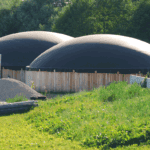


What is Biomethane and Why is it Key in 2025?
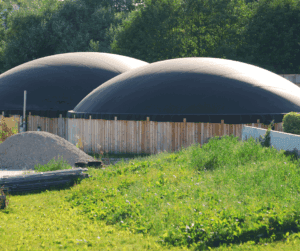
Biomethane is the purified version of biogas: a renewable gas with a methane content exceeding 95%, comparable to conventional natural gas but 100% renewable in origin. It is obtained by purifying biogas produced in anaerobic digestion plants that process organic waste, slurry, sewage sludge or energy crops.
Unlike biogas, biomethane can be directly injected into the natural gas grid, used as vehicle fuel (CNG/LNG) or exported. This versatility makes it one of the renewable energy sources with the greatest growth potential in the coming years.
In 2025, global biomethane demand has grown exponentially driven by three key factors:
- EU decarbonisation regulations (Fit for 55) and REPowerEU targets.
- The need for energy independence following the 2022 gas crisis.
- The growing interest from heavy industry in green gases to decarbonise hard-to-electrify processes.
The Global Biomethane Market: Figures and Trends
The global biomethane market has experienced accelerated growth. According to the latest industry estimates, Europe leads production with over 1,000 operational plants, while the United States has doubled its installed capacity in the past three years. Asia-Pacific is emerging as the highest-growth potential market.
| Region | Operational Plants (est.) | Capacity (GWh/year) | Growth 2023-2025 |
|---|---|---|---|
| Europe | >1,000 | >20,000 | +35% |
| United States | ~350 | >8,000 | +65% |
| Asia-Pacific | ~200 | >4,000 | +80% |
| Rest of world | ~100 | >1,500 | +40% |
Leading Biomethane Producers in Europe
Europe has the most mature biomethane production ecosystem, with Germany, France, Denmark and the Netherlands as leading markets.
Germany
Germany is Europe’s largest biomethane producer, with over 400 plants injecting gas into the grid. Key companies include BioEnergie Tauberfranken, Envitec Biogas and Verbio, which operates several large-scale plants converting cereal straw into biomethane.
France
France has experienced the fastest growth in Europe for biomethane. Companies such as Engie, TotalEnergies and Storengy lead the market, backed by highly competitive government injection tariffs. The country has over 500 active injection points.
Denmark and the Netherlands
Denmark stands out for its high percentage of biomethane in the gas grid (already exceeding 30% of national gas consumption). Nature Energy, now owned by Shell, is Europe’s largest private producer. The Netherlands is betting heavily with companies like Gasunie and Attero.
Spain
Spain is in a phase of accelerated growth. The Renewable Energy Plan and NextGenerationEU funds are driving construction of new plants. Companies such as Acciona, Enagás and Naturgy are investing significantly, with projections of 10.5 TWh of capacity by 2030.
Leading Biomethane Producers in the United States
The US biomethane market is dominated by the Renewable Natural Gas (RNG) sector, driven by the Renewable Fuel Standard (RFS) programme and Inflation Reduction Act (IRA) tax credits.
- Clean Energy Fuels: Largest distributor of RNG for transport in North America.
- Archaea Energy (BP): Over 50 landfill gas capture projects.
- Amp Americas: Specialised in biomethane from pork and dairy manure.
- Vanguard Renewables: Leader in food waste anaerobic digestion.
- Dominion Energy: Traditional utility with strong investment in farm-based RNG.
Key Technologies in Biomethane Production
The final quality of biomethane depends largely on the biogas purification process. The most widely used technologies in 2025 are:
| Technology | CH4 Efficiency | Relative Cost | Main Application |
|---|---|---|---|
| Pressure Water Scrubbing (PWS) | 97-99% | Medium | Medium-large plants |
| Membrane Separation | 90-98% | Low-Medium | Small-medium plants |
| Pressure Swing Adsorption (PSA) | 96-99% | Medium-High | Large plants |
| Cryogenic | +99% | High | Renewable LNG plants |
| Amine Scrubbing | 98-99% | High | High purity required |
The Crucial Role of Desulphurisation in Biomethane Production
Before carrying out the purification process to obtain biomethane, it is advisable to desulfurize the raw biogas to reduce the hydrogen sulfide (H₂S) content.
The use of Micronox ON16 at this stage protects the systems and extends their service life. This step is important for two main reasons:
- H₂S damages purification equipment and membranes.
- H₂S is toxic and corrosive to pipelines and installations.
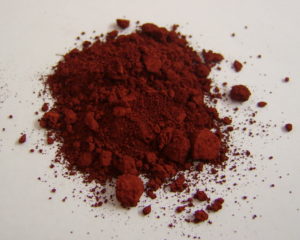
MICRONOX BIOX, developed by PROMINDSA, is a high-efficiency natural iron hydroxide specifically designed for biogas desulfurization. Its natural origin, high specific surface area, and regeneration capacity make it one of the most efficient and sustainable solutions on the market.
Market Outlook: 2025-2030
Projections for the global biomethane market are very optimistic:
- The IEA estimates that biomethane could meet up to 20% of global gas demand by 2040.
- The EU targets production of 35 billion m3 of biomethane per year by 2030 (REPowerEU).
- Biomethane prices have reached competitive parity with LNG in many European markets.
- Digitalisation and IoT are improving plant operational efficiency by 15-20%.
Conclusion
Biomethane is no longer an emerging technology but a consolidated reality in the global energy mix. Leading producers combine cutting-edge technology with efficient treatment processes where natural iron hydroxide desulphurisation plays an indispensable role. At PROMINDSA we support biomethane plants with solutions that guarantee gas quality, equipment protection and regulatory compliance.
Want to know more about how MICRONOX BIOX can optimise the desulphurisation process at your biomethane plant? Contact our technical team.